Plant Performance and Fuel Accounting
A combined heat and power plant produces two products — electricity and heat — from one fuel stream. No instrument separates them. To know what a kilowatt-hour costs and what a tonne of steam costs, the fuel has to be allocated between them by a chosen method, and no method is physically neutral. The choice is a methodological decision with commercial consequences: it sets the internal transfer price of steam, and through that the apparent profitability of everything downstream.
We implement that calculation inside the control system, live, archived, and against the method the plant is required to report under.
What we calculate
Specific reference fuel consumption for electricity supplied and for heat supplied.
Boiler efficiency, gross and net, by direct and indirect method. The indirect method means accounting for the losses individually — flue gas, chemical incomplete combustion, mechanical incomplete combustion, radiation to the surroundings, and ash. For gas firing and for petroleum coke firing on a circulating fluidized bed boiler, where the fuel itself varies.
Steam turbine heat rate, efficiency and losses against the factory characteristic, with the deviation costed.
Auxiliary power consumption as a share of generation.
Fuel heat utilisation factor.
Balances for water, steam, gas and electricity, technical and commercial.
Allocation method
Under the physical method used in Romanian and post-Soviet practice, heat supplied from a CHP plant is charged at the specific fuel consumption an equivalent boiler house would have, and the remaining fuel is charged to electricity. Where a plant reports in heat rate rather than in specific reference fuel consumption, the same measurements produce both; the difference is the convention, not the physics. Exergy-based and market-based allocation produce different answers from the same measurements.
We implement whichever the plant reports under, and can run two in parallel where a plant answers to more than one regulator or has to reconcile a regulatory figure with an internal one.
Fuel that changes while you burn it
Petroleum coke is not a specification, it is a delivery. Its calorific value moves, and an efficiency figure computed against an assumed value is decorative.
On a 260 t/h CFB boiler we calculate the calorific value of the coke automatically from the combustion result and feed it back into two places: the efficiency calculation, so the number stays true, and the fuel allocation across the feeders, so each feeder delivers heat rather than mass.
Where the numbers go
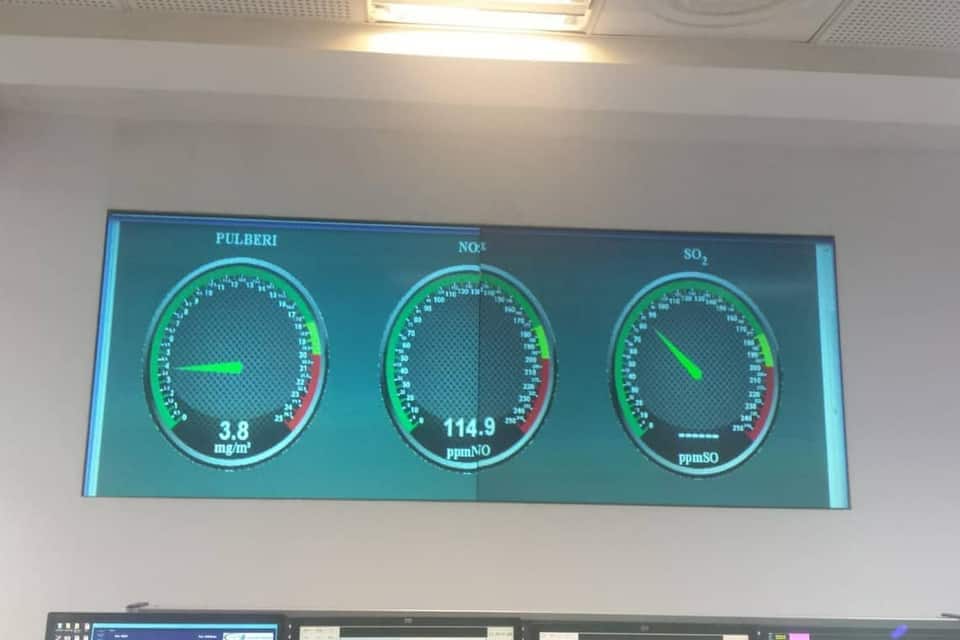
Not into a monthly report. Onto the operator's screen, into the historian, and into the reports that the people who can act on them actually read — unit efficiency to the process engineer, emissions to the environmental engineer, cost and consumption to finance.
Data is taken from DCS ABB Industrial IT and DCS Emerson Ovation over OPC, and from SCADA and commercial metering over Modbus, with central long-term archiving. Calculations follow ASME and the applicable industry standards.
On hydro the same discipline applies to different measurements. Net head computed continuously from headwater and tailwater level, and differential pressure across the trash racks, are what make a hydro efficiency figure mean something rather than a plot of output against gate opening. Vibration trended in the same archive as load, head and gate position is what turns monitoring into diagnosis.
Why an automation contractor does not do this
Writing the loop is the easy half. Knowing where each boiler loss comes from, what a turbine heat balance is made of, and why the allocation method changes the answer is process engineering. It is normally done by a consultant, in a spreadsheet, months after the fact. We do it in the control system, while the operator can still change something.